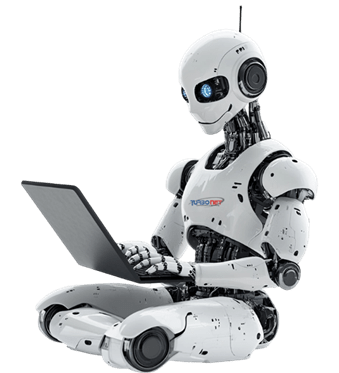
Businesses of all sizes—large, medium, and small—must innovate to ensure sustainable growth and remain competitive. To achieve these goals, they are implementing increasingly complex information systems and adopting technologies such as cloud and edge computing to meet ever-increasing performance needs. With the emergence of generative artificial intelligence technologies, businesses are redefining the notion of competitiveness. This blog post aims to examine the integration and use of generative AI within businesses.
A brief literature review on the concept of generative artificial intelligence to enhance understanding of the subject.
President Biden’s Executive Order (EO) 14110, July 2024, on Safe, Secure, and Trustworthy Artificial Intelligence, mentioned in the publication of the ” Artificial Intelligence Risk Management Framework: Generative Artificial Intelligence Profile,” published by Laurie E. Locascio, Director of the National Institute of Standards and Technology (NIST) and Under Secretary of Commerce for Standards and Technology, defines generative AI as “the class of AI models that emulate the structure and characteristics of input data in order to generate synthetic content.” This can include images, videos, audio, text, and other digital content”.
Thanks to its characteristics and potential, its use is rapidly spreading in various industries. Cyril de Sousa Cardozo and Fanny Parise, talking about the integration of generative AI in businesses, write in a book entitled “Guide to Generative AI” published in October 2023: “We are at the dawn of a revolution that will radically transform the way we work, inform ourselves, and communicate.” They illustrate this point with a revealing anecdote: while it took Netflix 3,600 days to reach 100 million users, ChatGPT achieved this feat in just 60 days.
Opportunities
Predictive analytics: Generative AI technology analyzes customer data to anticipate future needs. This proactive analysis capability helps deliver better-tailored products or services, strengthening customer relationships through an excellent, in-depth understanding of customer expectations. The study by Park et al. (2023), “Generative agent simulation of 1000 people” clearly demonstrates the potential of AI to simulate and predict human behavior with very high accuracy.
For example, by analyzing various customer data, generative artificial intelligence can predict what products or services customers are likely to buy in the future, as well as the time of year they will be ready to make those purchases. It is also able to determine the likelihood of customer disengagement with the company.
In addition, the use of generative artificial intelligence saves work teams time, improving business performance while reducing operating costs. This is because repetitive tasks are automated.
Take Expedia’s “HI Jiffy” chatbot as an example, which allows you to manage interactions with customers from Expedia or other platforms from a unified inbox. This system is designed to optimize time management and reduce response times by simplifying message management. Moreover, it has the ability to interact with many customers simultaneously.
challenges:
Multiple challenges still need to be overcome to better leverage these new technologies in businesses, particularly ethical issues.
Copyright issues: Generative AI generates new ideas, new services, and new products from previously created data. Issues related to data confidentiality and the quality of the data used to power AI.
The utilization of generative artificial intelligence is poised to revolutionize the global business environment. It will enhance the competitiveness of companies, allowing them to deliver higher-quality services more efficiently. This transition should be managed with careful consideration and responsibility to safeguard our values, rights, norms, behaviors, and employment.
REF
.- Cyril de Sousa Cardozo & Fanny Parise, 2023 – Guide de l’IA générative : Transformez votre quotidien professionnel à l’ère de ChatGPT, Bing, Bard, Bloom, Claude -1ère Edition octobre 2023 – 240 pages – ISBN 978-2-8073-6170-6.
.- Jean-Marc Lehu, 2003 – Stratégie de Fidélisation – 2eme Edition, aout 2003- 454 pages
.- Gina M. Raimondo, Laurie E. Locascio, 2024 – Artificial Intelligence Risk Management Framework : Generative Artificial Intelligence Profile. NIST Trustworthy and Responsible AI NIST AI 600-1- https://doi.org/10.6028/NIST.AI.600-1
.- Park J., Zou C,, ShawA , .. & Bernstein M., November 15, 2024: Artificial Intelligence (cs.AI); Human-Computer Interaction (cs.HC); Machine Learning (cs.LG) https://doi.org/10.48550/arXiv.2411.10109
.- Bick, A., Blandin, A., Deming, D.J., 2025; The Rapid Adoption of Generative AI, Federal Reserve Bank of St. Louis Working Paper 2024-027. : https://doi.org/10.20955/wp.2024.027
.- Fabrice Martin, 2023 – L’IA générative : un outil pour améliorer l’expérience client et la fidélisation : https://www.afrc.org/2024/12/02/12-2023

 Rosemond's MSc Blog